ABOUT
AMI
ISO
SURVEY
ABOUT
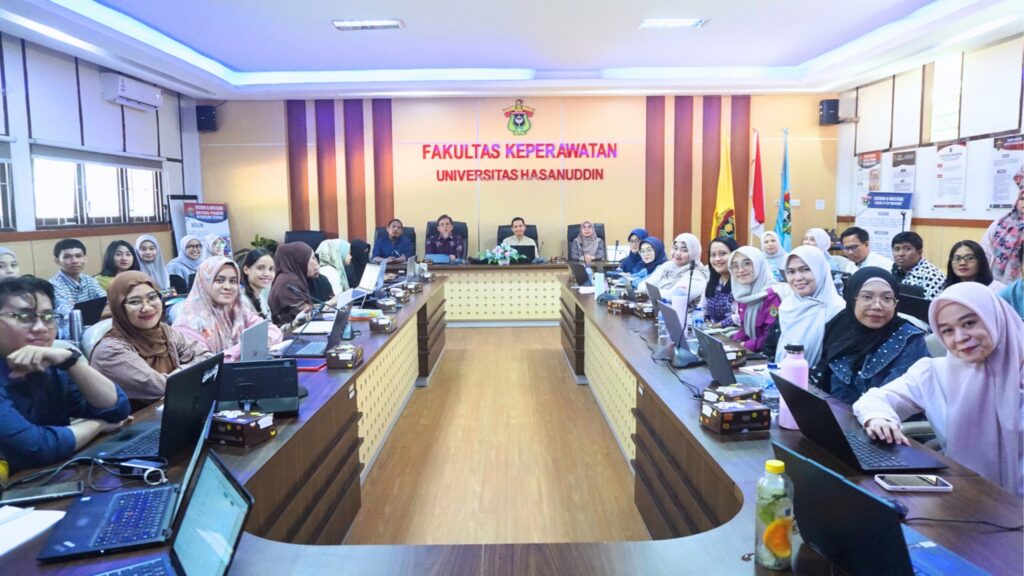
The Quality Assurance and Reputation Improvement Unit (QARIU) is a cluster established by the rector with the task of conducting internal quality assurance and control at the faculty level in accordance with the regulations of Hasanuddin University Rector’s Decree Number 16/UN4.1/2022 regarding the organization and working procedures of faculties and schools at Hasanuddin University. The Quality Assurance and Reputation Enhancement Cluster is tasked with planning, implementing, controlling, and developing quality assurance and reputation enhancement in accordance with its scope of work. In carrying out its duties, the Quality Assurance and Reputation Enhancement Cluster has the following functions:
- Formulating academic quality and reputation policies that align with the academic quality policy of Hasanuddin University, in order to achieve the academic performance targets of the faculty and study programs.
- Formulating and developing academic quality standards that align with the quality standards of Hasanuddin University.
- Planning and implementing strategic programs to enhance the reputation and ranking at the faculty level.
- Developing and strengthening cooperation with national and international ranking institutions through coordination with the Hasanuddin University Reputation Enhancement Center.
- Implementing academic quality and management standards that align with the quality standards of Hasanuddin University.
- Formulating academic quality and reputation manuals that align with Hasanuddin University’s quality manual.
- Developing a monitoring and evaluation system for academic quality and reputation based on information systems.
- Implementing reputation enhancement and ranking programs at both the national and international levels.
- Monitoring and evaluating academic quality and reputation assurance activities.
- Providing written reports on monitoring and evaluation results along with recommendations to the Dean.
- Conducting an analysis of the follow-up to monitoring and evaluation activities.
- Providing recommendations for improvements to achieve the faculty and study program’s objectives.
- Performing other tasks assigned by the Dean
Acting Personnel of Quality Assurance and Reputation Improvement Unit (QARIU)
Head : Dr. Suni Hariati, S.Kep.,Ns.,M.Ke
Secretary : Arnis Puspita, S.Kep.,Ns.,M.Kes
1. Internal Quality Assurance System Policy

The internal quality assurance system Policy (4867UN4/IT.03/2017 is a set of rules that serve as a reference for the implementation and quality practices across various pillars of organization and management in upholding the Tridharma (three main responsibilities) of Hasanuddin University. This policy serves as the foundation for the development of more operational documents below it, such as Quality Standards (21840/UN4.1/DA.05.00/2018), Quality Manual (24516/UN4.1?LK03/2018), Assurance Form (1579/UN4.1/LK04.00/2018), in the context of internal quality assurance system implementation that refers to the Hasanuddin University Academic Senate Regulation Number 4867/UN4/IT.03/2017 concerning the Internal Quality Assurance System Assurance Policy. The internal quality assurance system Policy document contains the design and implementation of the quality culture at Hasanuddin University, philosophical foundations, paradigms, and institutional principles and management, especially regarding the vision, mission, and objectives of Hasanuddin University’s educational activities.
2. Quality Standard

The Quality Standards are criteria that indicate the expected level of performance and are used to measure and specify the quality requirements and work achievements of individuals or work units. The Quality Standards for the Faculty of Nursing at Hasanuddin University adhere to the Quality standards of Hasanuddin University. These standards include educational standards, research standards, community engagement standards, and additional higher education standards in accordance with their missions. Unhashas established 25 standards that are divided into three major categories, namely 9 (nine) National Higher Education Standards, 8 (eight) National Research Standards, and 8 (eight) National Community Service Standards. Faculties and study programs implement the established standards in all their activities. In implementing these standards, faculties and schools carry out routine and continuous monitoring and evaluation activities.
3. Quality Manual

The quality Manual is a written document that contains practical guidance on how to run or implementing internal quality assurance system . This quality Manual book/document serves as a guide for decision-makers within the scope of SPMI, as well as for faculty and educational staff in implementing quality Standards, in accordance with their respective standard authorities established by the Higher Education Standards (SN-PT Dikti) referring to DIKTI Standards. This manual applies to all standards at the time the standards are designed, formulated, and established. The scope of implementation covers the aspects of Determination, Implementation, Evaluation (implementation), Control (implementation), and Improvement of internal quality assurance system (PPEPP).
4. Quality Form
The QUALITY Forms contain the necessary forms and templates for each quality standard as guidelines for the steps in performing tasks and documenting the execution of tasks/activities.
5. Standard Operational Procedure
List SOP Article 5 paragraph (1) Permenristekdikti No. 62 of 2016 concerning SPM Dikti states that SPMI has a cycle of activities consisting of: Determination of Higher Education Standards, Implementation of Higher Education Standards; Evaluation of the implementation of Higher Education Standards, Control of the implementation of Higher Education Standards; and Improving Higher Education Standards. The evaluation as intended in the paragraph is carried out through an Internal Quality Audit.
Quality Audit is a systematic and independent test to ensure that the effective implementation of PT activities is in accordance with the plan and the results are in accordance with standards to achieve the goals of the institution/PT as well as opportunities for improvement. This audit aims to:
- Determine suitability or nonconformity.
- Evaluate the system’s ability to meet regulatory/legislative requirements and other relevant requirements (if any)
- Evaluate the effectiveness of system implementation.
- Identify improvement opportunities.
Internal Quality Audits are carried out by Unhas periodically (per year) and online via https://spmi.unhas.ac.id/
AMI
AMI Faculty of Nursing results
a. Diploma in Nursing
| 2021 | 2022 |
 |  |
| 2023 | 2024 |
|
b. Bachelor of Science in Nursing (BSN)
| 2021 | 2022 |
 |  |
| 2023 | 2024 |
 |
c.Professional Nurse (PN)
| 2021 | 2022 |
 |  |
| 2023 | 2024 |
 |
d. Bachelor of Physiotherapy
| 2021 | 2022 |
 |  |
| 2023 | 2024 |
 |
e. Physio Profession
| 2021 | 2022 |
 |  |
| 2023 | 2024 |
 |
f. Master of Nursing (MN)
| 2021 | 2022 |
 |  |
| 2023 | 2024 |
 |
g. Advanced Surgical Nursing Specialist
| 2021 | 2022 |
| – | – |
| 2023 | 2024 |
 |
ISO
ISO 9001: 2015 is a quality management standard issued by the International Organization for Standardization (ISO) which includes several requirements and conditions that must be fulfilled by companies / organizations in establishing a quality management system. In order to maintain this commitment, Hasanuddin University continues to standardize product quality from year to year referring to the International Organization for Standardization (ISO). ISO 9001:2015 audits are carried out:
- External audit
External audits are carried out once a year from PT SAI GLOBAL - Internal audit
Internal audits are carried out twice a year by certified internal auditors
1. ISO 9001;2015 Certificate (2019-2022)

2. ISO Certificate for 2022 – 2025

SURVEY